

December 2025:
I have released the AI-news aggregator https://signalbreak.ai/.
I used Lovable and Google Antigravity to vibe code, and Google Gemini-endpoints to build AI logic into the product.
New Year’s Eve 2016, Tokyo:
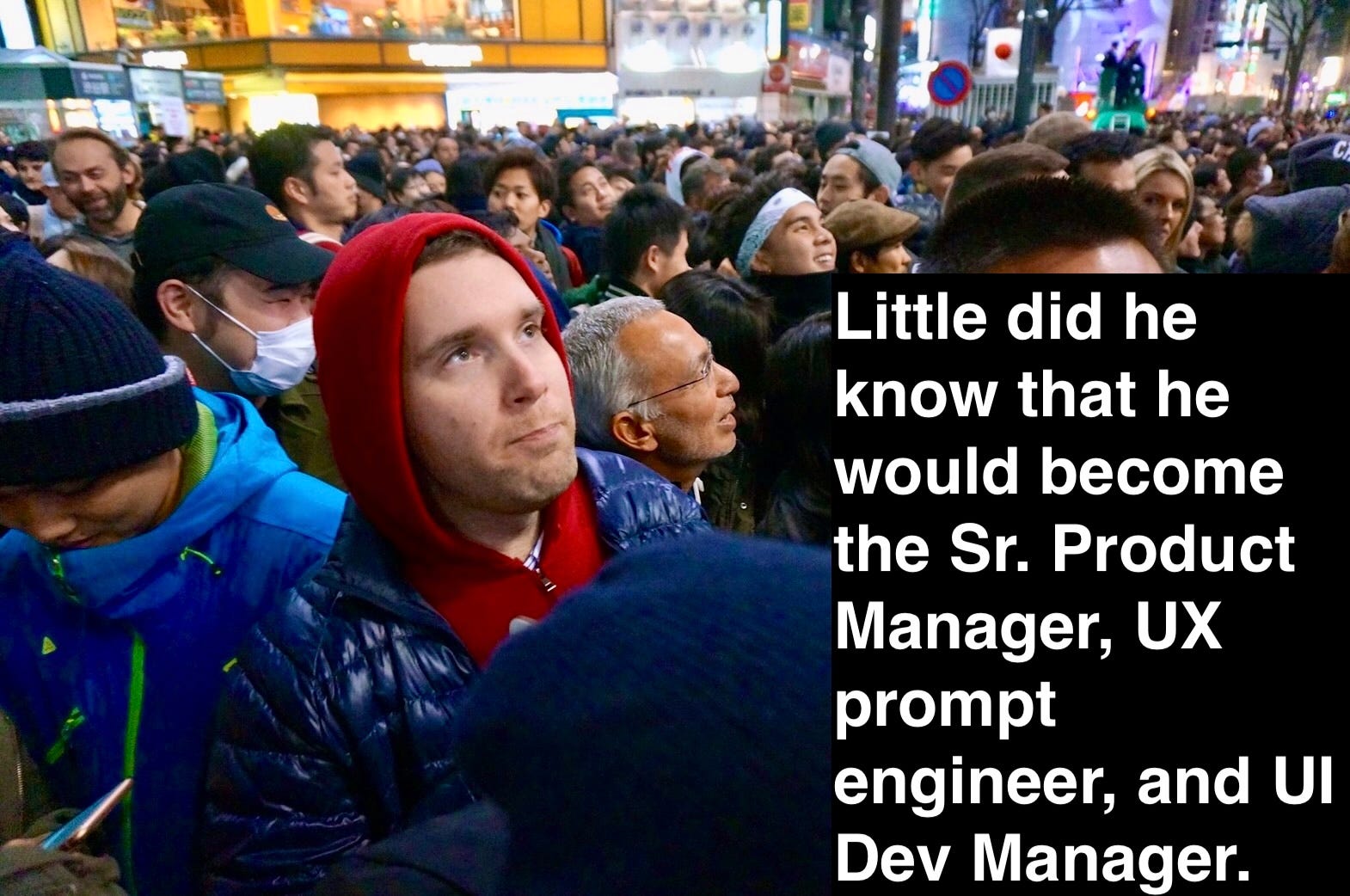
I’m jet-lagged, I just have arrived to a celebrating Tokyo, and quietly proud of myself for navigating the Tokyo metro without getting lost. Shibuya Crossing is pulsing, the countdown screens are warming up, and inside my pocket sits something that made the world feel strangely small:
BreakingNews.com.
I kept checking it between the neon signs and the crowds, earthquakes, political shifts, late-night developments. It was raw, immediate, and felt like having a global newsroom whispering into my hand. There were editors behind it, sure, but no algorithmic filter. Just the world, in real time.
I didn’t realise that this moment, this feeling, was about to disappear.
Why Breaking News Didn’t Make It
Breaking News looked like a product that should’ve survived the decade. It had:
Millions of followers
A highly engaged, high-trust audience
A fast, clean mobile experience
Editors who understood urgency
Yet NBC shut it down at the end of 2016, explaining that the business simply wasn’t sustainable.
If you zoom out, the problems become clearer:
1. A brilliant product with the wrong business model
Breaking News was designed for utility and speed, prioritising external sources over in-app engagement. This approach, while practical, resulted in high operating costs that were not sustainable under an ad-driven model. The team recognised that the app’s revenue generation was insufficient to cover these expenses.
2. Distribution shifted under their feet
By 2016, most people were already consuming news through platforms: social networks, phone lock screens, Apple News, Google Now. Breaking News had to fight giants for home screen real estate. And the giants were winning, mobile users overwhelmingly spent their time inside platform ecosystems, not dedicated news apps.
3. Automation arrived too late
Breaking News relied heavily on human editors for curation. It worked, but it didn’t scale. The company never reached a point where the cost of human-driven speed matched its revenue model.
So the problem wasn’t lack of love. It was lack of economic gravity.
Why the World Is Different Today
Since that night in Shibuya, the news ecosystem has changed in three fundamental ways.
1. News has become a background process
People no longer “go to” news, it comes to them.
Notifications, widgets, feeds, summaries, lock screens, smart assistants. The world pushes information at you now. But this shift also created alert fatigue: many users have turned off news notifications entirely because most alerts are noisy, irrelevant, or sensational.
The challenge today isn’t “send more alerts.”
It’s send only the ones that matter.
2. Platforms own the distribution layer
Google, Apple, Meta, and X increasingly intermediate news consumption. They’re adding AI-driven summaries, context boxes, answer experiences, and extracted article previews.
The aggregator layer, once thought to be a minor UX feature, is now a full strategic battleground.
3. Generative AI changed the economics
The biggest shift: the cost structure has inverted.
In 2016, to run a real-time newswire-like product, you needed:
a newsroom
a curation team
a full editorial workflow
Today, AI can:
read and summarise thousands of articles
cluster them into coherent storylines
extract what’s new, what changed, and what matters
surface the essence of breaking events in real time
Apps like Particle, Volv, are already doing this at scale.
This doesn’t replace human judgment (and shouldn’t), but it dramatically reduces the mechanical workload, making an operation that once required a full team accessible to a far smaller one.
This is exactly where Breaking News was too early.
AI Changes the Game for a New Breaking News
So what does an AI-driven Breaking News 2.0 look like?
1. From isolated updates to narrative-level awareness
AI can group related updates into evolving storylines, something historically done manually by editors. Instead of dozens of standalone articles, users see:
the central event
the key updates
the context
what changed since last check
It transforms a firehose into a map.
2. Summaries that compress complexity without distortion
Speed matters, but clarity matters more. AI summarisation allows:
real-time updates
consistent structure
fast comprehension
links back to full sources for verification
This is perfect for breaking news, where users need signal, not noise. And critically: summarisation is now cheap.
3. Human-in-the-loop elevation
AI can do the clustering and compression.
Humans do judgment.
What is worth an alert?
What is actually breaking?
What should be highlighted?
What needs editorial caution?
Given how easily AI can hallucinate, sourcing, transparency, and editorial guardrails are more important than ever.
The best system is hybrid, fast where machines excel, trustworthy where humans intervene.
Why Product People Need to Go Full-Stack Now
I went full-stack on https://signalbreak.ai/
There’s a lot of conversation right now about how product managers must become more full-stack, not necessarily in the sense of building entire backends, but in understanding and operating across design, data, code, and rapid solution discovery.
Gunnar has written on Always Be Shipping about how AI changes the product role:
Someone once said, smart people with AI at hand will become even smarter. Less smart people with AI tools at hand will not come across as any smarter at all.
In other words:
Knowing the customer problem is no longer rare.
Knowing how to rapidly prototype, test, and iterate solutions is.
Being able to work hands-on with AI tooling and pipelines is now part of the craft.
As AI collapses the cost of experimentation, the bottleneck moves to the PM’s ability to formulate, test, and refine end-to-end solutions.
I realised I couldn’t just observe that shift.
I needed to live it.
So I put my own skin in the game and started building an AI-driven news aggregator, not as a thought exercise, but as a real product. Touching the APIs, the clustering logic, the summarisation, the UX decisions, the editorial guardrails. Owning the loop.
It’s uncomfortable.
It’s exhilarating.
And it feels like the only honest way forward for a PM working in 2025.
Back to Shibuya — and Forward to Whatever’s Next
I still remember standing in Shibuya Crossing with Breaking News in my pocket, feeling the world narrowing into a tiny stream of signals. That experience lodged itself somewhere deep.
Breaking News shut down soon after.
The need it met never did.
Today the tooling finally exists to revisit that idea with:
cheaper summarisation
automated clustering
hybrid editorial judgment
a modern distribution environment
So this is the next iteration for me:
Taking that spark from 2016, rebuilding it with 2025 AI, and exploring whether there is a product-market fit this time for real-time, AI-supported, high-signal news.
Let’s see what I ship next.
Always be shipping 🧡
Alexander